Blog
-
 June,12 2013Admincategory 1, category 2Read More
LONDON — Late last year, the British model Kate Moss revealed a personal fact that intrigued not only the fashion and celebrity media, but also the art world. The revelation went beyond the acknowledgement from Ms. Moss, one of the most photographed women in the world, that she had tattoos. It included the claim that the swallows on her haunch were the work of the German-born British artist Lucian Freud, who had died the previous year. In a rare interview published in the December issue of Vanity Fair magazine, Ms. Moss pondered the financial value of that tattoo: “It’s an original Freud. I wonder how much a collector would pay for that? A few million? I’d skin-graft it.” The numbers might sound surprising, but a nude portrait of Ms. Moss, painted by Mr. Freud in 2002 while the model was pregnant, sold three years later at Christie’s in London for €3.92 million, or about $5.14 million at current exchange rates. The mention of a skin graft put the spotlight on the relationship between tattoos and fine art — and by extension, art collection. Until recently, the integration of tattoos into the art world was mostly confined to performance art. In 2000, for example, the Spanish artist Santiago Sierra paid four prostitutes the price of a hit of heroin and filmed them having single black lines tattooed across their backs. But today, tattoos — much like graffiti, which in the past decade has been transformed from cult to collectible — are increasingly being embraced by the art world, particularly in areas where art and fashion meet. For the introduction in 2011 of Garage magazine, for instance, the editor Dasha Zhukova commissioned artists including Jeff Koons, Dinos Chapman and Richard Prince to design tattoos. One version showed part of a nude model whose private parts were covered by a green butterfly sticker created by the English artist Damien Hirst. Taking off the sticker uncovered a butterfly tattoo, also designed by Mr. Hirst. Prestigious art institutions like the Musée du Quai Branly in Paris have taken note. The museum is planning an exhibition in May 2014 called “Tatoueurs, Tatoués,” or “Tattooists, Tattooed,” to explore tattooing as an artistic medium. The show will include “works produced specially for the event by internationally renowned artist tattooists, body suits on canvas and volumes comprising imprints taken from living models,” the museum said in a news release. Two exponents who are bridging the art and tattoo worlds are the artist Duke Riley, based in New York, and the London-based tattooist Maxime Büchi. Mr. Riley, who trained in painting and sculpture at the Rhode Island School of Design and the Pratt Institute in New York, describes himself as a “fine artist and tattooist.” His growing success as an artist has “elevated” his status as a tattooist, he said. Mr. Büchi, a London-based tattooist and the editor of Sang Bleu magazine, which is available at the Tate Modern in London and the Colette store in Paris, says the Internet has made it possible to browse a huge online catalog of tattoo art. While he claims to dislike the term “tattoo artist,” he said that an increasingly discerning public had bolstered demand to be inked by someone whose work in other media is sold, exhibited and recognized. In addition to being an exhibition space, the Internet provides opportunities for marketing and self-promotion in a rapidly changing field. Twenty years ago, Mr. Riley said, tattooists learned a wide range of styles to demonstrate mastery of the craft. Today, by contrast, there is a sharp increase in tattooists seeking to establish unique artistic identities. As with contemporary art, questions about originality and copyright have emerged. Some see imitation in the field as part of a collective tattoo tradition, while others are more protective. Mr. Riley is sanguine about the subject — when his work is copied, he said, he is flattered. Mr. Büchi said he felt “honored” when copied, but he acknowledged the complexity of the issue. “If you are creating a style which is so specific that nobody imitates it,” he said, “then you are clearly doing something wrong. But it’s a delicate thing.” Mr. Büchi spoke of a “license” of sorts, an agreement between those who are inspired and influenced by one another. “That’s different from someone seeing a design of mine online and passing it off as their own,” he said. As for Ms. Moss’s musings about reselling tattoos, Mr. Riley said that skin grafting had come up in conversation “at least once a week” in his Brooklyn parlor, East River Tattoo. The preservation of skin art is already a reality. The Wellcome Collection in London and the Amsterdam Tattoo Museum both feature preserved tattooed skins. And the Irish performance artist Sandra Ann Vita Minchin, who commissioned a tattooist to recreate a 17th- century painting by Jan Davidsz. de Heem on her back, plans to have her skin preserved posthumously and auctioned to the highest bidder. In 2006, the Belgian artist Wim Delvoye created a piece of work titled “Tim, 2006,” in which Mr. Delvoye tattooed the back of a man, Tim Steiner, and signed it. In 2008, it sold to a German art collector for €150,000, which was split between the Zurich gallery which had sold it, the artist and the model. Mr. Steiner displays his skin several times a year, and has given consent for his skin to be framed after his death. Preserving skin posthumously is likely to become relatively common by the time the 20-year-olds of today enter old age, Mr. Riley said, particularly considering the monetary investment involved with collecting high-end tattoos. Such thoughts can veer toward the sinister. Ilse Koch, the wife of a Nazi commandant during the Holocaust and one of the first prominent Nazis to be tried by the U.S. military, was accused of having taken souvenirs from the skin of concentration camp victims with distinctive tattoos. In Roald Dahl’s 1952 short story “Skin,” a destitute man enters a gallery and displays a portrait tattooed on his back by a now celebrated painter, leading to a bidding war and an unsettling ending. A more likely scenario, Mr. Riley said, is that family members would choose to preserve the tattoos of loved ones. For Mr. Büchi, however, tattooing is not art to be passed on through generations. “The value of a tattoo lies in the fact that it does not belong to the artist in that way,” he said. “To preserve it would be to devalue it. Its value is that it will die with you.’ Read More
-
 June,12 2013Admincategory 1, category 2Read More
Our Bodies, Our Ink
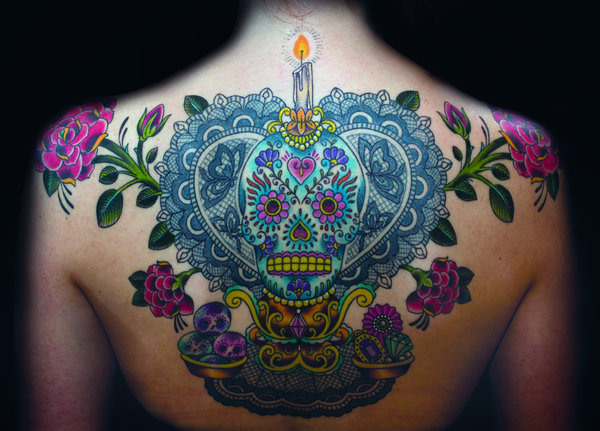
Among the first mainstream American celebrities to openly wear tattoos was Janis Joplin. On her left wrist, she had a Florentine bracelet. On her chest, she wore a small heart — the size of a candy heart. “Just a little treat for the boys,” she told Rolling Stone, “like icing on the cake.” It seems like only yesterday that tattoos were rarities, like certain crows. They were worth commenting upon, either for their beauty or their banality. Now tattoos creep like vines along the arms, legs and torsos of nearly everyone you meet. If print is dead, ink is undead — and on the move. There’s been some sophisticated fiction about skin and ink. I’m thinking especially of Sarah Hall’s novel “Electric Michelangelo,” a finalist for the 2004 Man Booker Prize. But it’s a lacunae in our literature that there hasn’t been a definitive nonfiction book on the topic, a volume that packs sociology and criticism and history and memoir into a dense sleeve, as a tattoo artist might put it, of meaning. While we await that book, we have Margot Mifflin’s perceptive and moving “Bodies of Subversion: A Secret History of Women and Tattoo,” first published in 1997 but reissued now in a heavily updated and resplendently illustrated third edition. For most of history, tattooing has been a male preoccupation, either a one-fingered salute or an exercise in swagger. Think of Popeye and his twin anchors. Ms. Mifflin had the good idea to examine tattooing in the Western world from a female perspective. Her relatively slim book doesn’t provide a truly wide-angle view, but the insights she brings are insinuating and complex. This new edition of “Bodies of Subversion” arrives at the crest of a wave. For the first time, according to a 2012 Harris Poll, American women are more likely to be tattooed than men. Some 23 percent of women have tattoos; 19 percent of men do. They’re no longer rebel emblems, Ms. Mifflin notes. They’re a mainstream fashion choice. She is mostly an admirer of women’s tattoo culture. Tattoos have been “emblems of empowerment in an era of feminist gains,” she declares. They’re also “badges of self-determination at a time when controversies about abortion rights, date rape and sexual harassment” have made women “think hard about who controls their bodies.” Her book includes striking color photographs of the tattoos some women have had embroidered on their chests after mastectomies. Thanks to recent legislation, tattoo artists can sometimes directly bill insurance companies for this work. (If only Joplin had known that it would be possible to have your weed and your tattoos covered by insurance, she might have decided to stick around.) But Ms. Mifflin is a flinty observer. She notes that tattoos have the “ability to degrade as well as to enhance, to invoke the sacred and the inane.” She assesses the work of social critics who posit that tattooing can be a political cop-out, a cover for disengagement. These critics argue, she writes, that “tattooing shifts the focus of women’s issues from society to the self; that tattooed women are empowered only in their minds; and that women who find solace in tattoos are no different from women for whom shopping and exercise are substitutes for problem-solving.” Ouch, as the client said to the tattooist. “Bodies of Subversion” is delicious social history. Tattooing was an upper-class social fad in Europe in the late 19th century. Winston Churchill’s mother had a tattoo of a snake eating its tail (the symbol of eternity) on her wrist. The fad spread to America. In 1897, Ms. Mifflin writes, The New York World estimated that 75 percent of American society women were tattooed, usually in places easily covered by clothing. By the 1920s, tattooed women were mostly to be seen in freak shows and in circus acts, where they could make more money than tattooed men. They offered, the author avers, “a peep show within a freak show.” Tattoos lost their appeal for nearly everyone shortly after World War II. One reason was because “tattoos perpetrated in concentration camps had added a ghastly new chapter to tattoo history.” Ms. Mifflin’s story spins forward through the tattoo revival of the 1970s, when women with a tattoo or two began to shake the stigma that they were sexually available. She moves attentively through the 1980s and ’90s, the era that gave us Dennis Rodman, the lower-back tattoos now known as tramp stamps and a kudzu forest of copycat tribal tats. Her final chapter takes us up to the present day, with assessments of the tattoo artist Kat Von D’s fame and of cultural moments like the popularity of Stieg Larsson’s 2005 novel “The Girl With the Dragon Tattoo.” Ms. Mifflin appraises the work of famous female tattoists; she argues that the world needs tattoo critics. I hereby nominate Tim Gunn and Lil Wayne as the genre’s Siskel and Ebert. She is at her best when considering class and tattoos. She quotes an inked-up female doctor who says that it’s easier for professional women to wear them at work: “If you’re working some crummy little desk job with a dress code, it’s a lot harder to walk around wearing your tattoos in the open.” Ms. Mifflin deals, too, with the matter of tattoo regret. There’s plenty of that going around. She cites a survey by the Archives of Dermatology stating that 69 percent of tattoo removal requests come from women. Most got stamped at the age of 20 or so. Quoting the same survey, she says about tattoos, “Their marks of uniqueness ‘turned into stigmata.’ ” But the Harris Poll cited above also noted that 86 percent of tattooed people were content with their ink. Those who would shame women with tattoos often utter things like: How are those things going to look when you’re old and wrinkled? On the basis of the photographs of older women with tattoos in this book, I’d say they hold up pretty well. Read More
-
 June,12 2013Admincategory 1, category 2Read More
Keeping Their Art to Themselves
Iman Thomas would be the first to say that she is just not a cardigan kind of person. Nonetheless, her dresser drawers bulge with those demure long-sleeved sweaters, in colors ranging from rainbow to black. Even in the most torrid weather they’re part of her workday wardrobe in the employee benefits office at a Florham Park, N. J., insurance brokerage. This is how Ms. Thomas hides her tattoos: the inked images of the Virgin Mary and a dead girl crying bloody tears that fight for space on her right arm; the spider web that encircles her right elbow; the butterfly at rest on the inside of her right wrist; the rose in bloom on the inside of her left wrist. “There are parts of my body I wish I could get tattooed, but because I work in a corporate setting I have to keep them on a wish list,” she said. “This is a pretty buttoned-up company.” Ms. Thomas, 30, wore a cardigan to her job interview — preemptively and perhaps prudently — seven years ago, and remains grateful that the human resources manager never panned down to her right ankle, which bears a tattooed sword with a banner reading “Daddy” (when she meets with clients, on go Ms. Thomas’s black tights). “Nothing has ever been said, but you just kind of know what would be tolerated,” she said. Merely by glancing around, it’s clear that tattoos are no longer the sole province of gang members, garage mechanics, guys who are admirably confident that they will have the same girlfriend forever and Hollywood outliers like Angelina Jolie and Lena Dunham. Twenty-three percent of Americans have a tattoo, according to a Pew Research poll from 2010; and 32 percent of people ages 30 to 45 have at least one tattoo. But, like Ms. Thomas, a certain number of the tattooed work in sectors where it is considered undesirable, if not downright inappropriate, to wear your art on your sleeve. Sixty-one percent of human-resource managers asked last year in an annual survey by the Center for Professional Excellence at York College of Pennsylvania said a tattoo would hurt a job applicant’s chances, up from 57 percent in 2011. Suing over such a rejection is a dubious option. “No federal law prohibits employers from making a hiring decision because of a tattoo,” said Marc J. Scheiner, a senior associate specializing in employment law at Duane Morris, a law firm in Philadelphia. “But clearly you can’t discriminate on the basis of religion, so if someone has a religion-based tattoo, that may call for different analysis.” “When people ask, I say there’s a mix of legal and business considerations,” Mr. Scheiner said. “Sure, companies can have a dress-code policy of no tattoos. But I tell them to consider recruitment and retention issues.” Amy L. Hayden says that no one in a human-resources department has ever said anything to her about the elaborate floral design that starts at her collarbone and goes from shoulder to shoulder, the bird tattoo on her left wrist, the names of her two children inked on her inner left arm just below the initials of her late fiancé, and the Mayan-like etching that covers her right arm from shoulder to elbow a bit above a rendering of the flag of Chicago. “But I’m concerned and wonder if they play a role in my not getting hired,” said Ms. Hayden, 39, a writer and editor who moved to New York from Chicago last June. She said she had networked vigorously, applied for two to five jobs a day, and has had “a lot of first and second and third interviews — sometimes, it was down to me and another person, but I never got it.” Just before Thanksgiving, Ms. Hayden applied for a job as an editor at MarloThomas.com, a site on The Huffington Post. “I went through a phone and in-person interview with the staff, and then I had a meeting with Marlo,” she said. “I did cover up most of my tattoos but a few were visible. She didn’t say anything or give me funny looks, but I have a feeling that her seeing my tattoos had an impact, though it could just be that she clicked with someone more.” (E-mails to The Huffington Post about hiring and tattoos were not answered.) Ms. Hayden now has an unpaid internship at a small book publisher. She said that during her interview she was advised that her tattoos might be an obstacle when she started looking for a full-time position. The warmth of the welcome depends on the nature of the job in question and the company ethos. When Jakob Hunt worked in human resources at the clothing company H&M, “they cared about people being stylish,” he said. “They saw my tattoos as a plus.” Elana Goldberg, 22, a human-resources manager for Quantum Networks, an e-commerce firm, said she personally found tattoos objectionable. “But my company has a very open culture,” she said, and as a consequence, she recently hired a graphic designer with several tattoos. “When you’re introducing an employee to a client and you say ‘This is our designer,’ it’s assumed that that person may be a bit more artsy or free-spirited.” “My boss is very interested in a hipster environment,” she added. “He would never turn someone away because of that physical mark. If anything, it would make him even more attracted to the person.” But many with tattoos and with corporate jobs talk about being occasionally uncomfortable because of the covering-up they think it requires, like Ms. Thomas, or the sense of leading a double life. “I feel there’s the corporate Robert and the rock ’n’ roll Robert, and they are pretty much compartmentalized,” said Robert Conlin, 37, a senior practice manager for a health care system in Chicago whose tattoos cover his chest, mid-forearms and legs, and include stars, skulls, the word “goblin,” and a quotation from “Hamlet.” “I put on a suit and tie to come to work and then I go home and put on the black T-shirt. I think, ‘If they only knew what I looked like under all this.’ ” This article has been revised to reflect the following correction: Correction: April 25, 2013 Because of an editing error, the Skin Deep column last Thursday, about employees who feel the need to conceal their tattoos at work, misstated one of the findings of a Pew Research poll from 2010 about Americans with tattoos. It found that 32 percent of people aged 30 to 45 have a tattoo, not that 32 percent of Americans with tattoos are 30 to 45 years old. The error was repeated in a capsule summary in the Inside The Times index last Thursday on Page A2. Read More